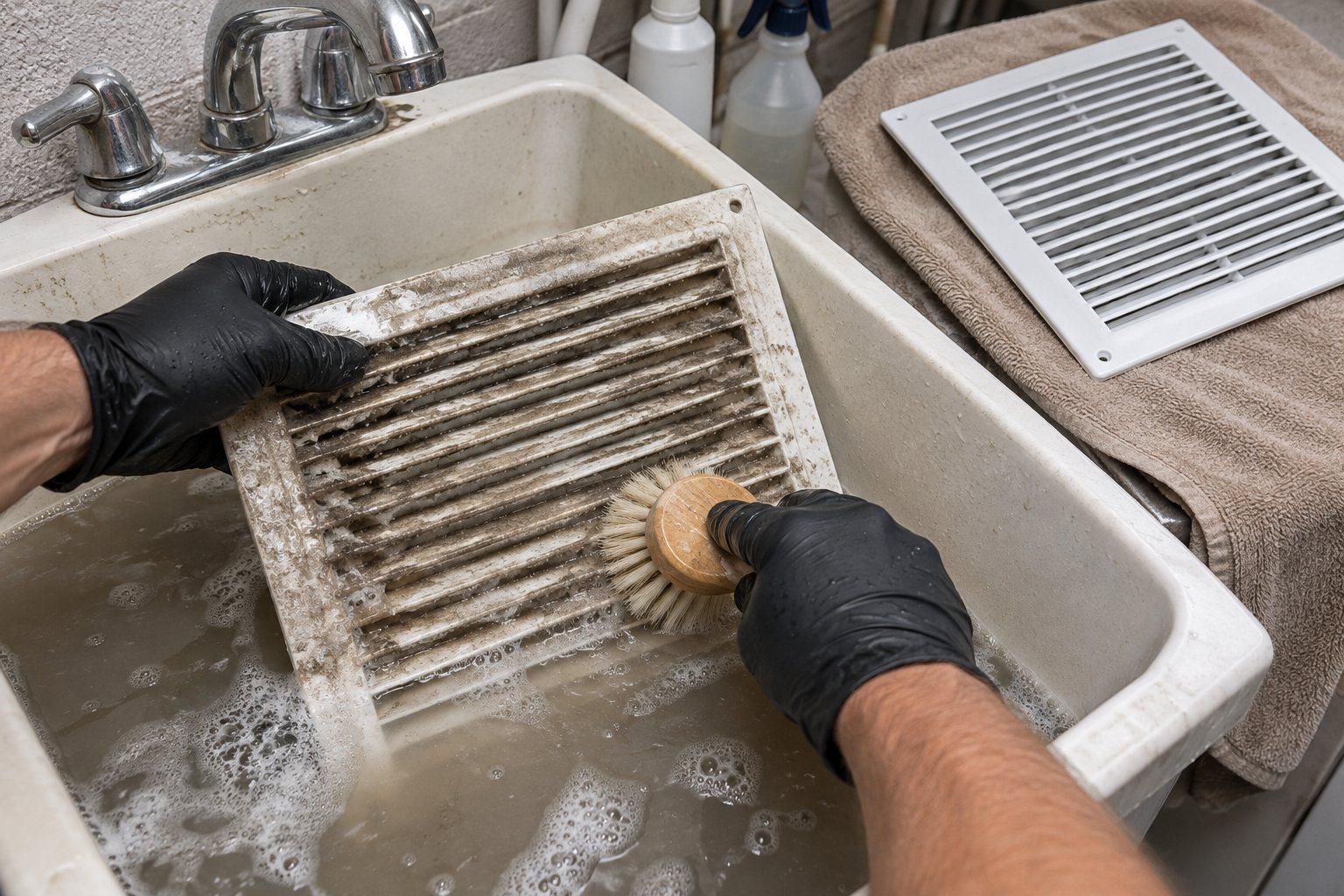
Vent covers and the duct opening
A dusty return vent is normal. The EPA says the covers can be vacuumed, or taken off and cleaned. EPA
- Switch the heating and cooling system off at the thermostat.
- Unscrew the vent cover, or lift it out if it sits loose in the floor.
- Vacuum both sides, then wash it in warm soapy water and let it dry.
- Vacuum as far into the duct opening as the hose reaches.
- Put the cover back and switch the system on.
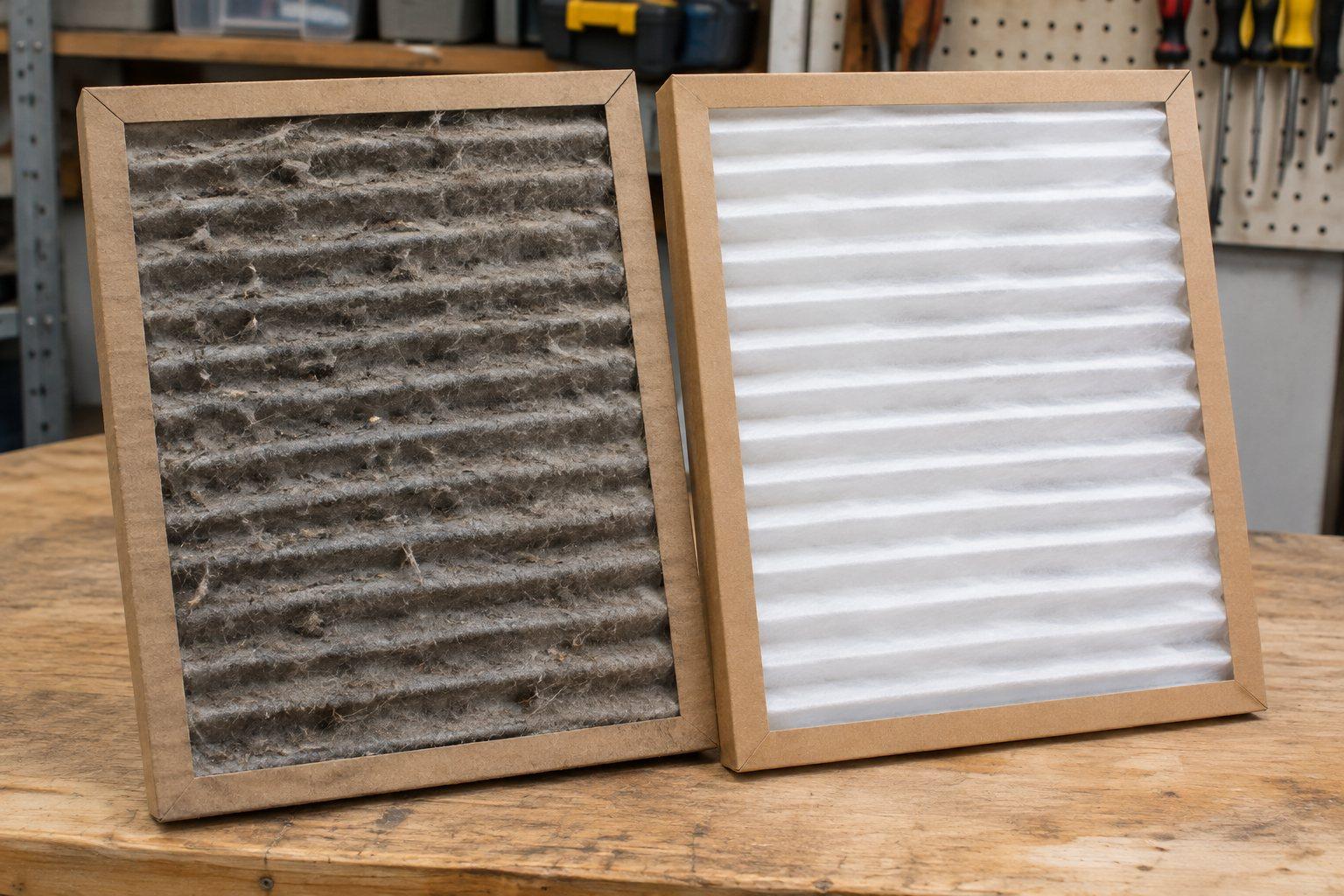
The air filter
ENERGY STAR says to inspect the filter once a month, and to clean or change it when it's dirty. ENERGY STAR A clogged filter lets dust past it and into the ducts. The EPA suggests a filter rated at least MERV 13, or as high as your system's fan and filter slot can take. EPA
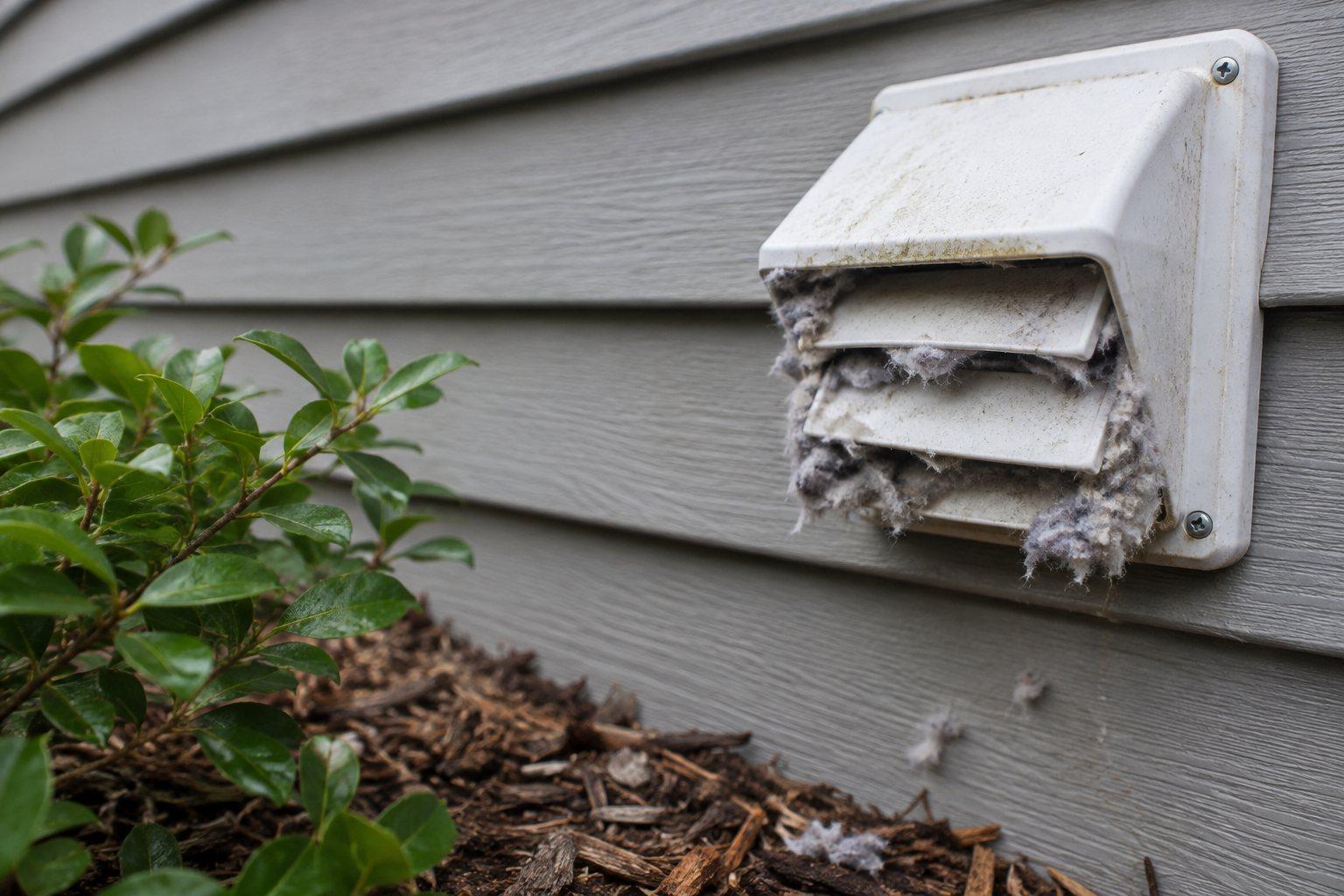
The dryer: lint screen, hose and outside hood
- Clean the lint screen before or after every load. CPSC
- Run the dryer and check outside. The flap on the vent hood should open, and you should feel air coming out. USFA CPSC
- Look behind the dryer. If the hose is white plastic or thin foil, replace it with rigid or semi-rigid metal duct. CPSC
- Pull lint out of the hood's opening by hand, with the dryer off.
The duct between the dryer and the hood is harder. It runs inside a wall or ceiling, often with bends, and PNNL advises a professional cleaning of it once a year. PNNL Dryer vent cleaning
To clean it between visits, follow How to clean a dryer vent yourself.
The AC drain
Water from the cooling coil runs out through a drain. DOE suggests passing a stiff wire through the drain channels now and then to keep them from clogging. DOE Leave the coil itself to the yearly service. EPA
Where to stop
Past the reach of a vacuum hose, the ducts run through walls, floors and the attic. Cleaning them means loosening the dirt with brushes or air whips. Meanwhile a powerful vacuum holds the whole system under suction, so the dust goes out and not into the rooms. How we clean
- A household vacuum can make the air dustier. The EPA notes that vacuuming can raise dust into the air and into the ducts. It suggests a HEPA vacuum, or the best bags yours can take. EPA
- Lined and flexible ducts tear. Fiberglass-lined ducts and duct board need soft brushes, and flex duct is often cheaper to replace than to clean. EPA
- Mold needs a diagnosis first. Something that looks like mold may not be, and the EPA says only an expert can say for sure. EPA
To decide whether the ducts need cleaning at all, see Do I need duct cleaning? For a schedule, see how often to clean air ducts.