Why lint in a dryer vent is a fire risk
Lint burns, and a clogged vent holds heat in. The U.S. Fire Administration found that not cleaning was the leading factor in the ignition of home clothes dryer fires from 2018 to 2020, at 31%. USFA
The National Fire Protection Association counted about 13,820 home dryer fires a year from 2014 to 2018. They caused 7 deaths, 344 injuries and $233 million in damage a year. NFPA
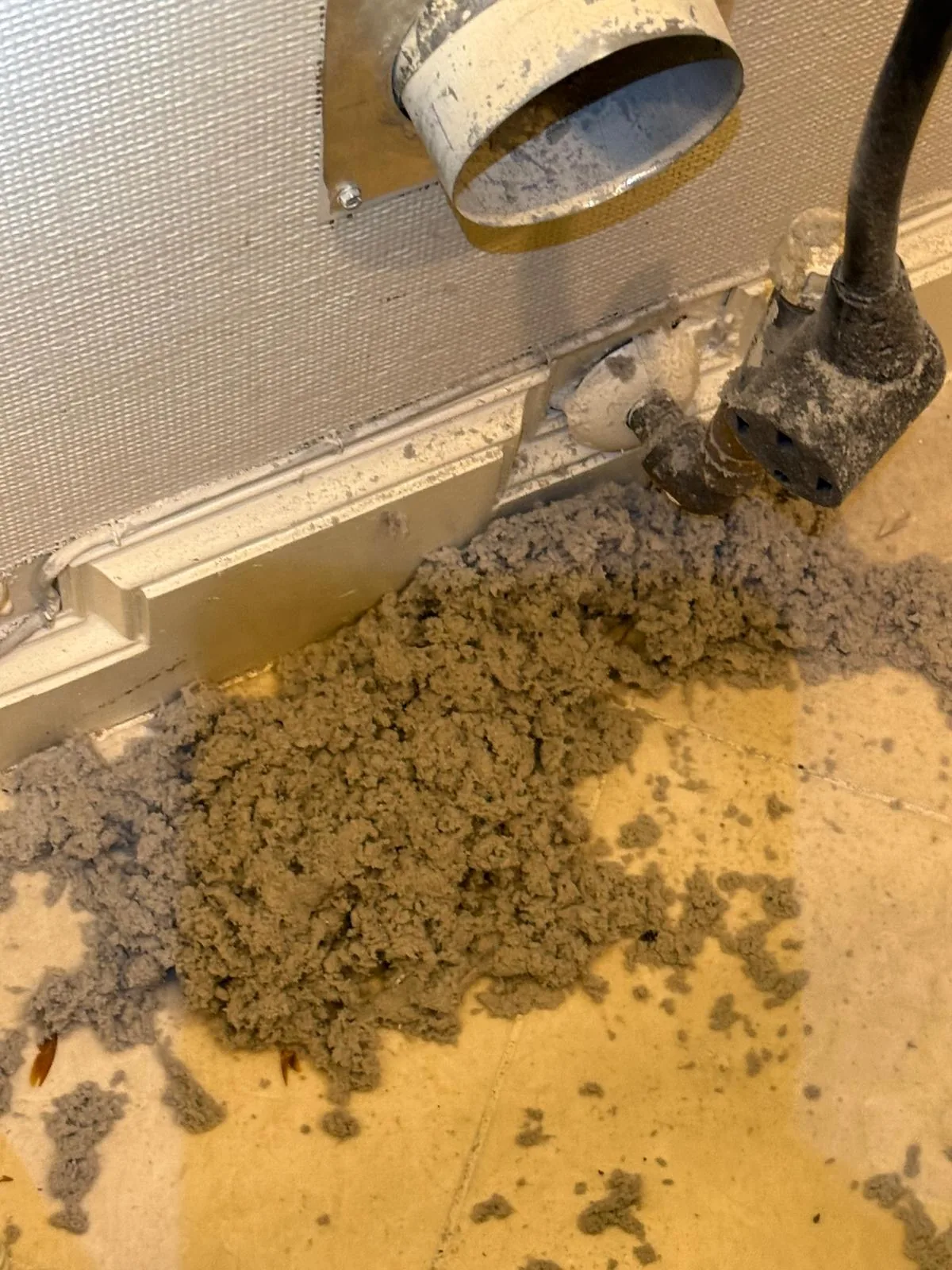
Signs your dryer vent is clogged
- Clothes take longer to dry than they used to.
- The dryer feels hot on the outside, or clothes come out very hot.
- You smell something burning.
- Lint collects around the outside hood.
- The flap on the outside hood doesn't open when the dryer runs. PNNL Maytag LG
A bent hose, a crushed duct in the wall or a blocked hood can cause the same signs. Our inspection finds which one it is.
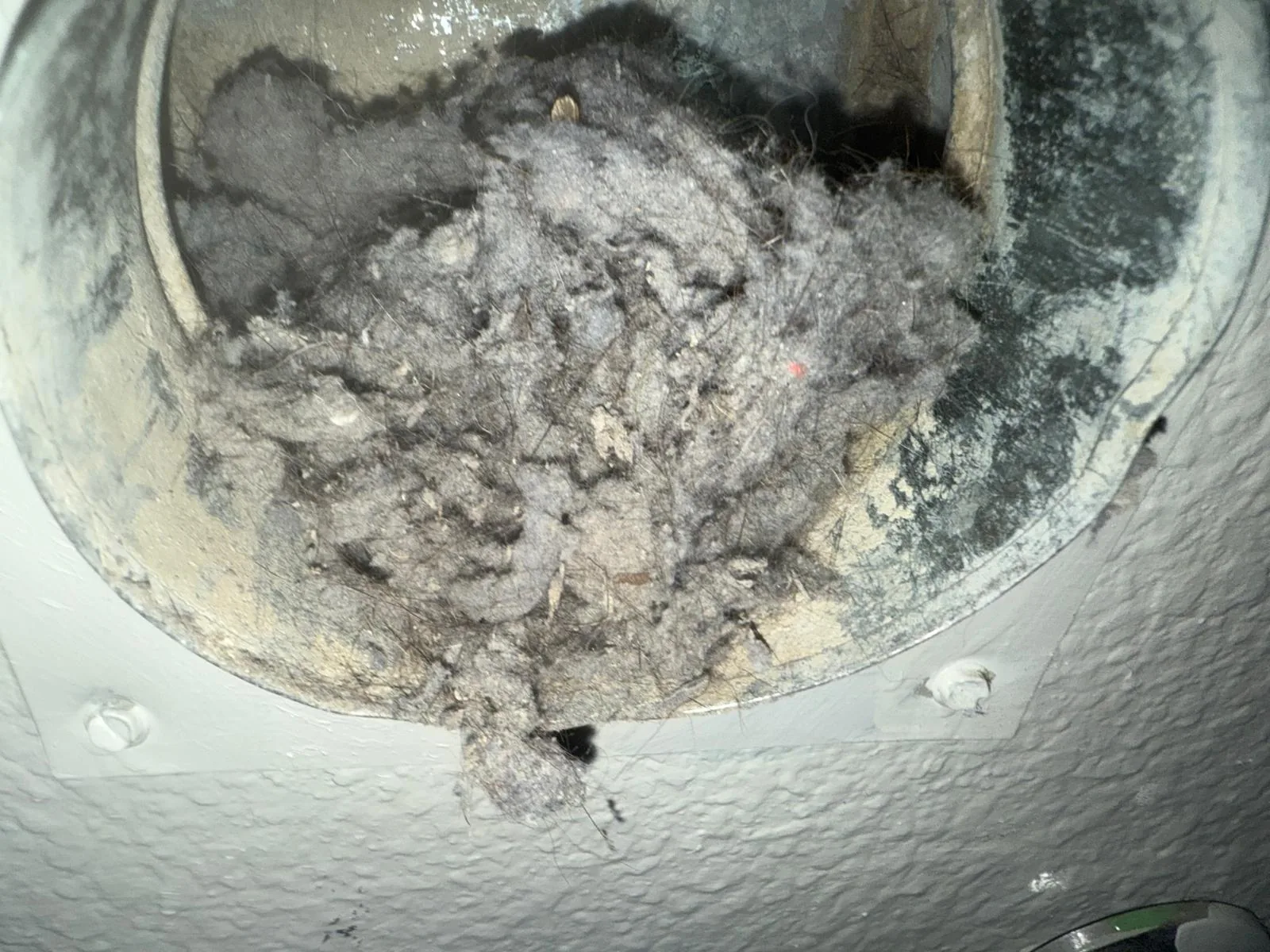
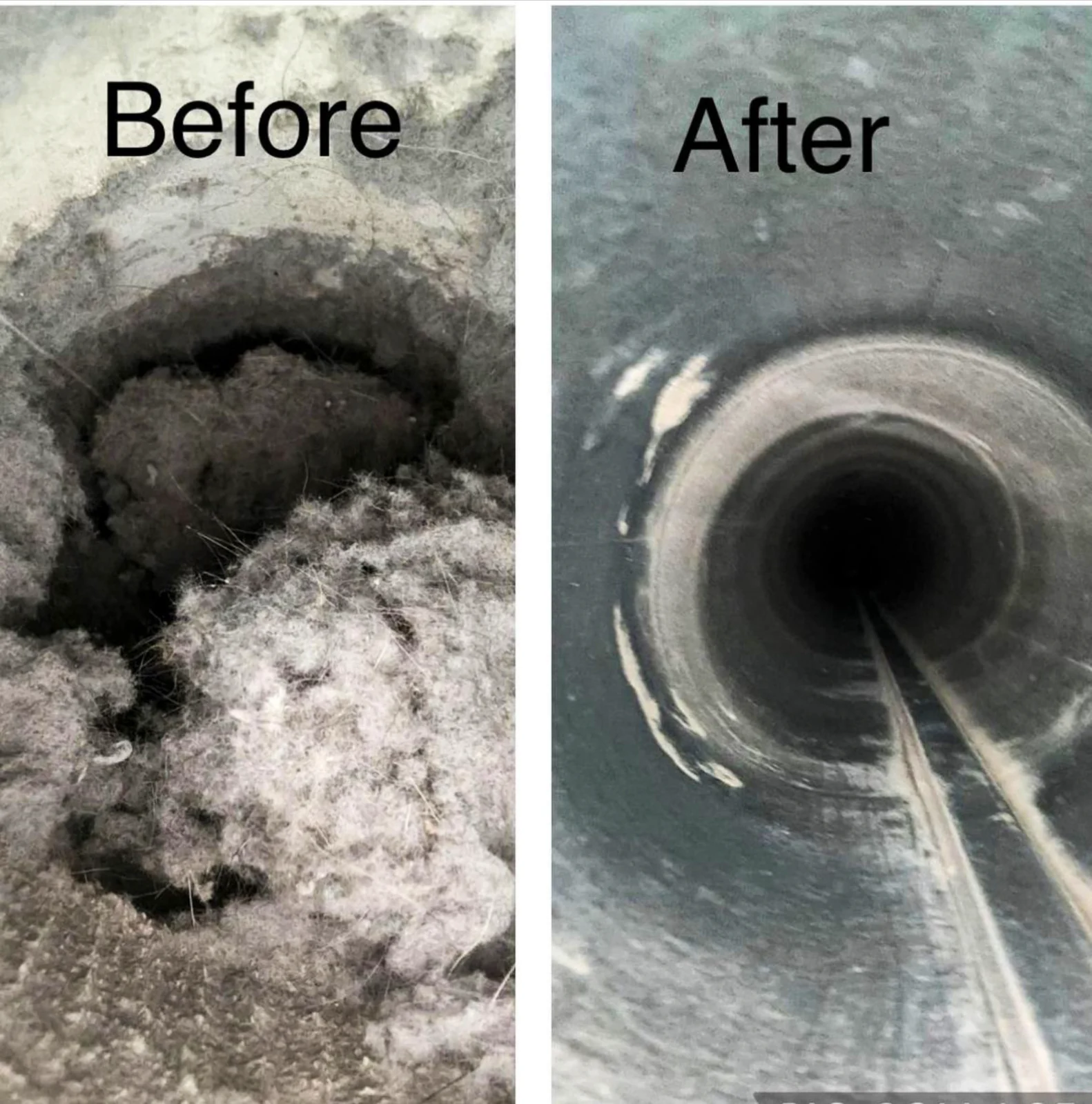
What we do when we clean a dryer vent
We clean from both ends, so we pull lint out of the whole run and don't push it deeper. We start by disconnecting the dryer and looking at the run.
- Rotary brushes loosen the lint along the duct, and a vacuum takes it out.
- We clean the transition hose, the short hose behind the dryer where lint packs in.
- We clear the outside hood, or cap, so the flap opens freely.
- We check the airflow at the outside hood afterward, and show you the flap opens and air moves through.
- We reconnect the dryer, push it back without crushing the hose, and run it on heat before we leave.
When a foil hose should be replaced
Rigid or semi-rigid metal duct is the better choice. Foil or vinyl accordion hose has ridges that catch lint, and it kinks. A Department of Energy lab says vinyl, nylon and foil ducts aren't recommended, and that they void the warranty of most dryers. PNNL
If your transition hose is foil or vinyl, we tell you and quote the swap to metal. It's your decision, and we clean either way.
What the building code asks of a dryer vent
The 2024 International Residential Code sets these rules for a home dryer vent. IRC 2024
- The duct is smooth metal, 4 inches across.
- The hose behind the dryer is a single piece labeled for dryer use (UL 2158A). It's no longer than 8 feet and never hidden inside a wall.
- The duct runs no more than 35 feet to the outside. Each sharp 90-degree elbow counts as 5 feet of that.
- It ends outside the house, with a flap that closes and no screen.
Your town may enforce an older edition or its own changes, and your dryer's instructions can allow a different length. When we inspect, we tell you which of these your vent meets.
Other problems a cleaning turns up
Cleaning removes lint. It can't fix a vent that's built or damaged in a way that traps lint again. When we find one of these, we show you a photo and quote the repair as its own line.
- A broken or missing hood flap
- The flap at the outside hood should open when the dryer runs and close when it stops. Stuck open, it lets in birds, rodents and cold air. A guard or a new hood fixes it.
- A crushed or disconnected duct
- A run squashed behind the dryer or pulled apart in the wall, attic or crawlspace blows lint into the house and slows drying.
- A run that's too long
- Every foot and every bend slows the air. A run past the code's length needs a shorter route, or a power ventilator listed for dryer exhaust. The code doesn't allow an ordinary booster fan.
- A roof exit
- Vents that go up through the roof lose more speed and collect lint at the cap. They need cleaning from the roof, which we price separately from a wall exit.
How often to clean a dryer vent
At least once a year, by a professional. That's the advice of the Department of Energy's Building America program. PNNL A home with heavy laundry loads or a long vent run may need it sooner. Book early if you notice any sign of a clogged vent.
To do it yourself, follow How to clean a dryer vent yourself.
What dryer vent cleaning costs
Cost guides put a standard dryer vent cleaning at about $80 to $272. A vent that exits through the roof runs $150 to $250 in HomeGuide's figures, because the cleaner works from the roof. Cost guides
Your quote is a fixed price for your vent. See what cleaning costs for duct prices too.
Questions about dryer vent cleaning
Is dryer vent cleaning part of air duct cleaning?
No. The dryer vent is a separate run to the outside, and the work is different. You can book either one on its own, or both. See air duct cleaning.
Can I just clean the lint trap?
Clean the trap after every load. It doesn't reach the transition hose, the duct inside the wall or the outside hood, where lint also builds up.