How we clean air ducts
Source removal under negative pressure, as NADCA's ACR standard describes it.
Watch the six steps on a house
This is the source removal method in NADCA's ACR standard, in the order we do it. Pick a step to see it happen in the drawing, or play all six. From step 3 on, the system is sealed and under negative pressure, so dust moves toward the vacuum and not into your rooms.
Step 1 of 6
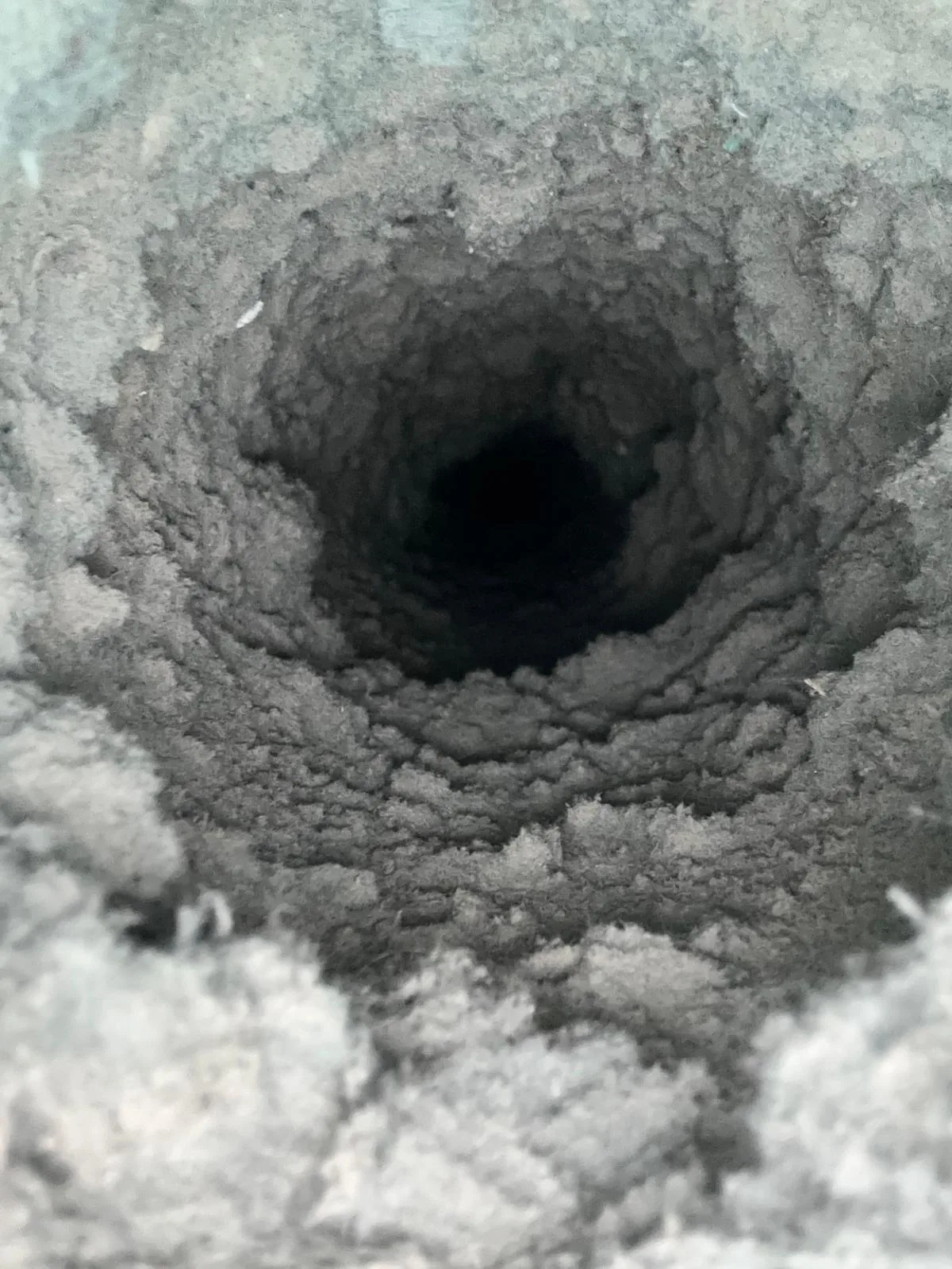
Inspect with a camera
We open supply and return vents on each floor and run a camera into the branch lines and trunk. You see the photos before you agree to anything. EPA
In the drawing: The camera goes up through a supply vent and along the trunk line, marking the dust it finds. The close-up is its view down the duct.
Step 2 of 6
Protect the house
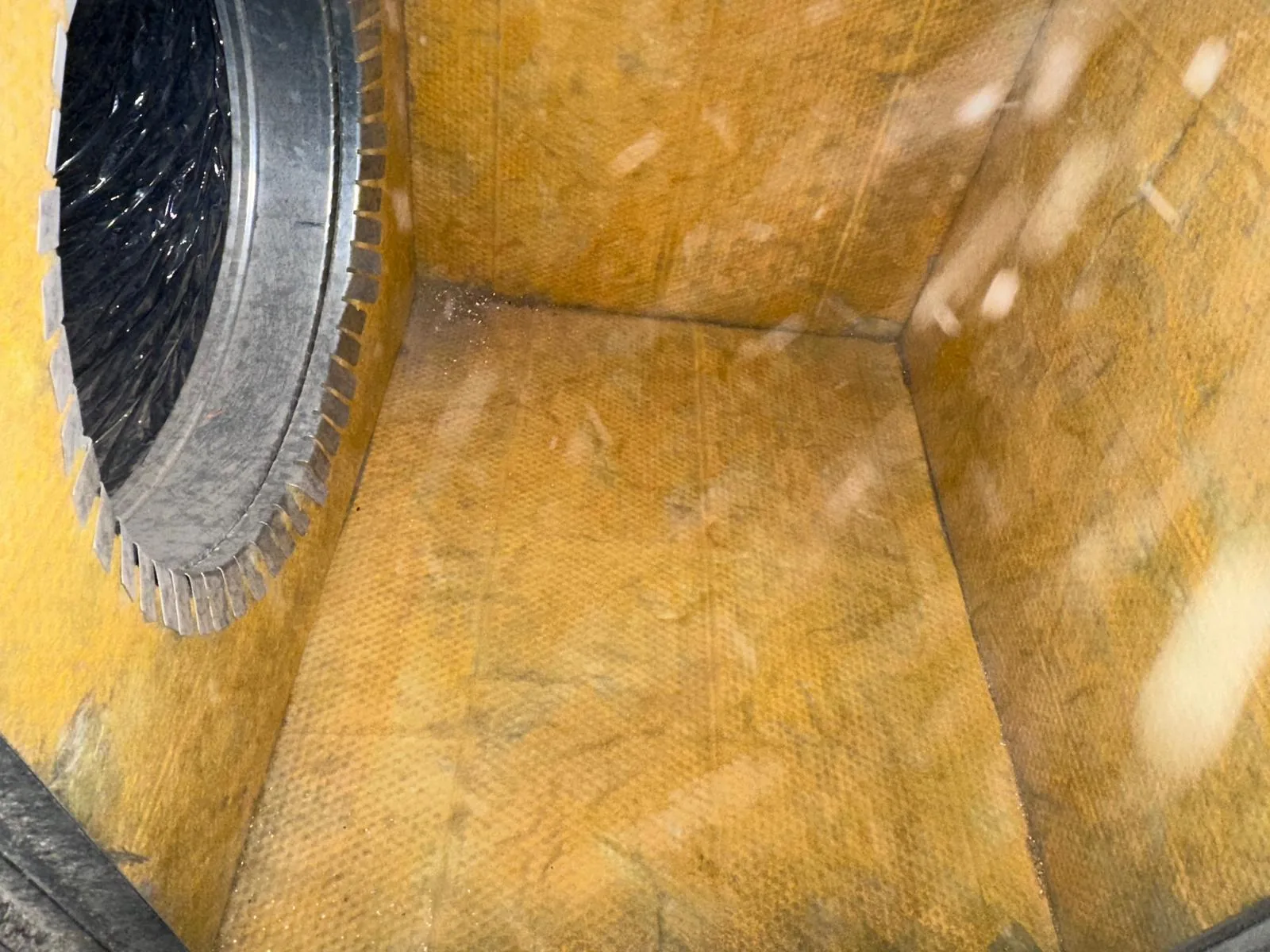
Drop cloths go down at every vent we work on. We cover and seal the vents so the system can be put under negative pressure. EPA
In the drawing: Covers go over the supply vents and the return, and drop cloths go down on the floor below. The close-up shows a cover going over a vent.
Step 3 of 6
Put the system under negative pressure
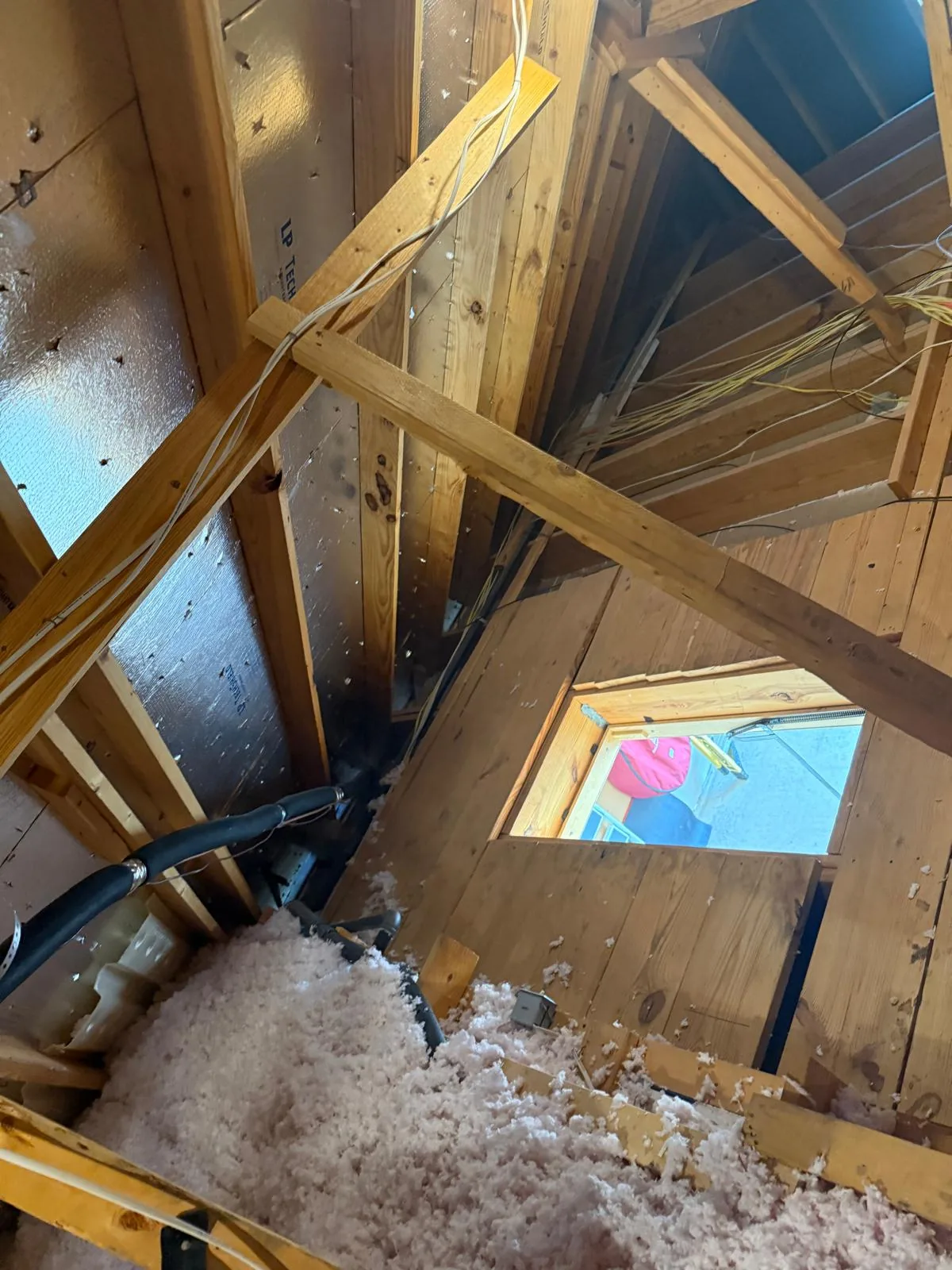
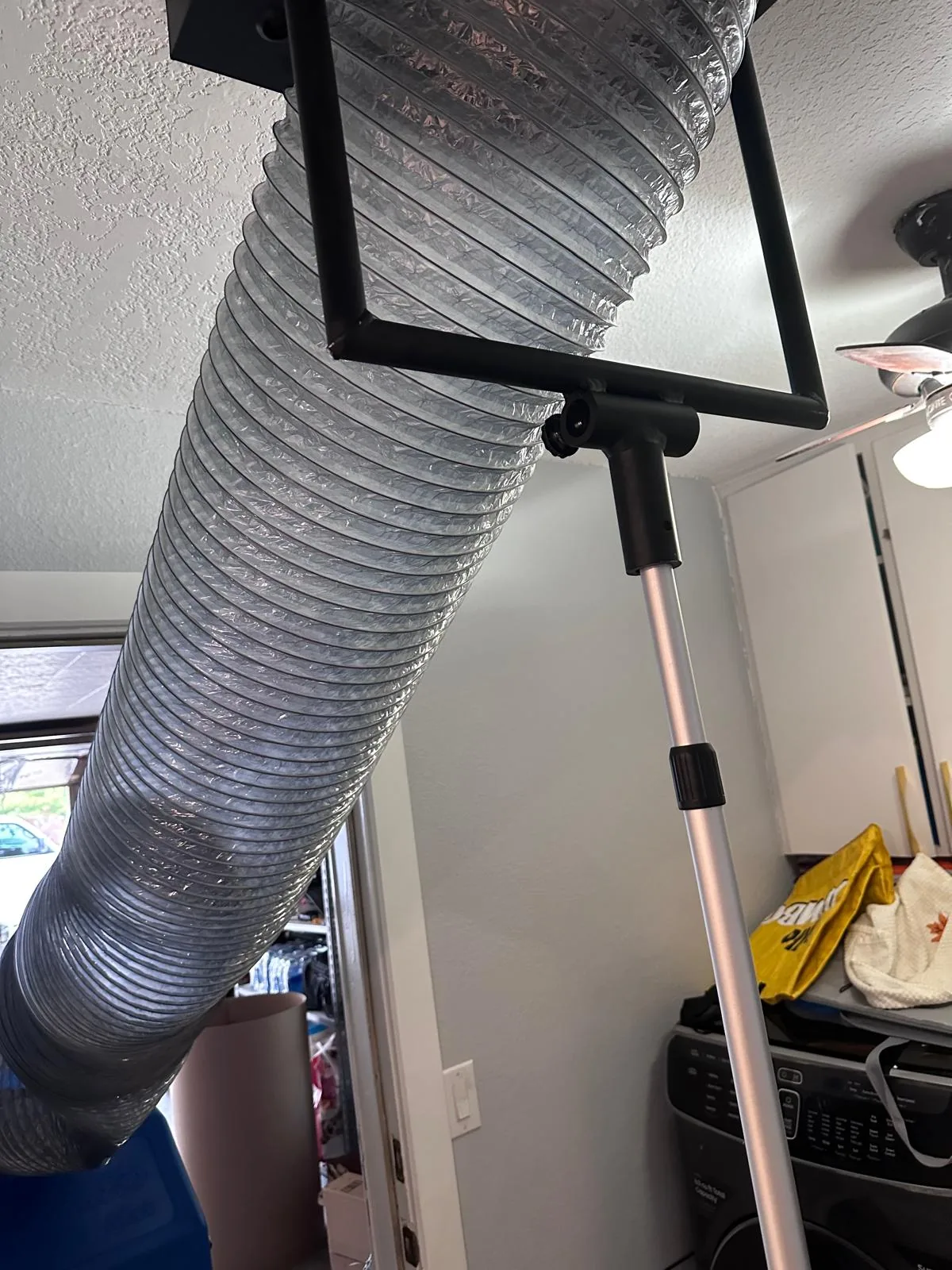
A HEPA-filtered vacuum connects to the trunk line through one sealed access hole and pulls air through the whole system toward it. NADCA
In the drawing: The hose goes up through the attic access to the trunk, and the vacuum pulls air from every vent toward it. The close-up shows air drawn down the duct.
Step 4 of 6
Brush every run loose
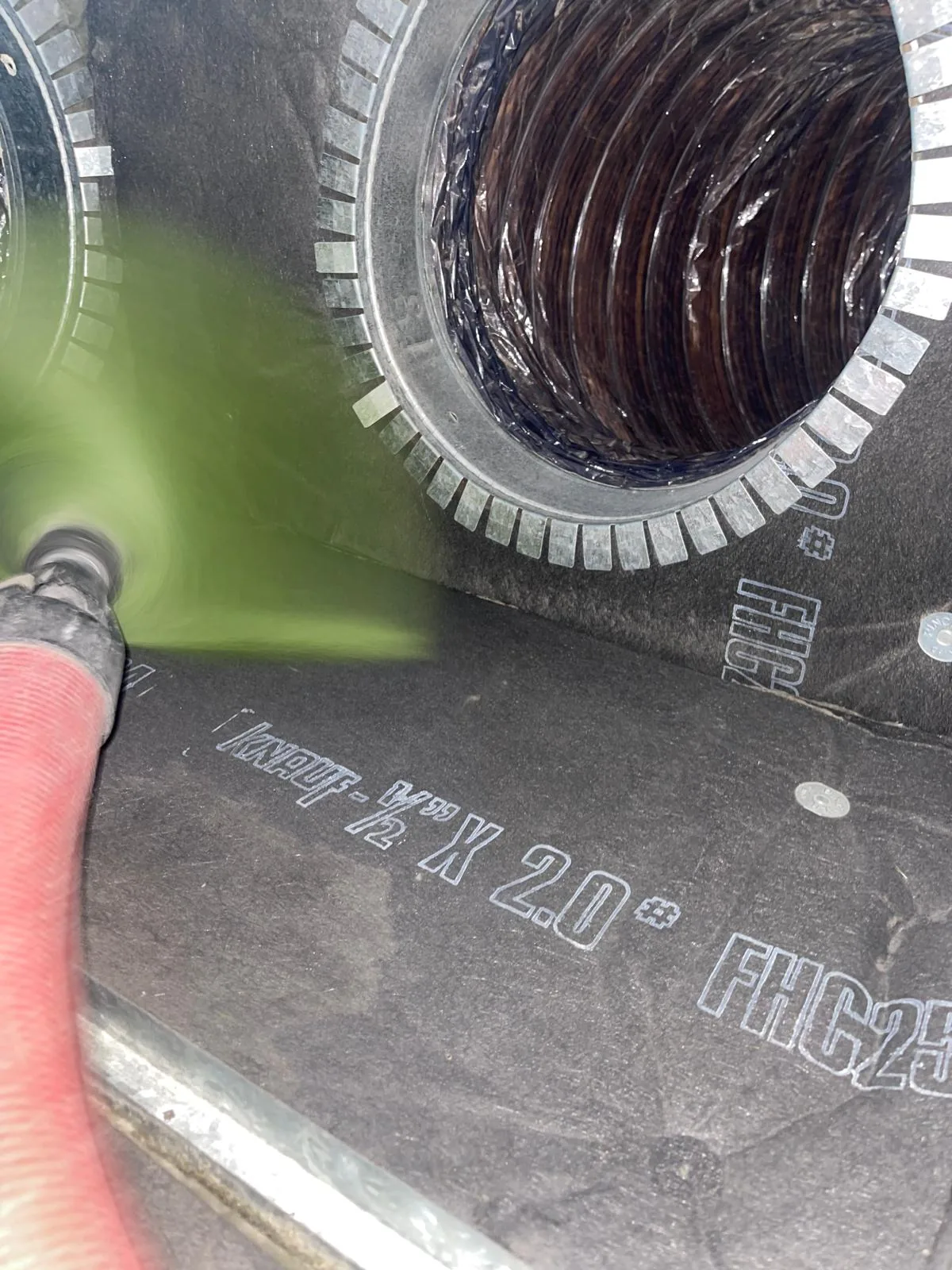
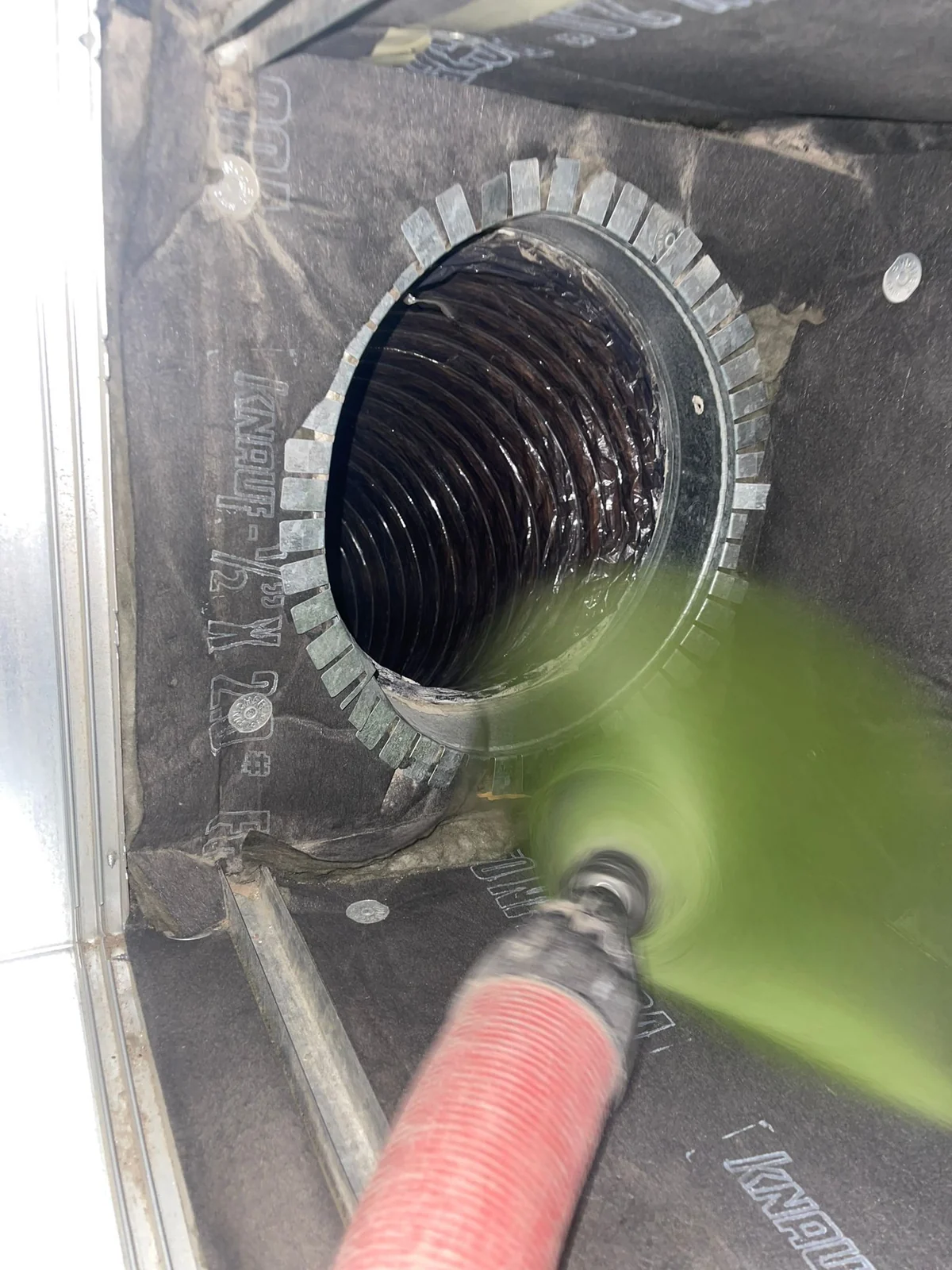
Rotary brushes and air whips go into each branch, one vent at a time, and drive the debris back toward the vacuum. This is source removal. NADCA
In the drawing: The brush spins up the branch, and the dust it knocks loose travels down the trunk and out through the hose. The close-up shows the brush inside the duct.
Step 5 of 6
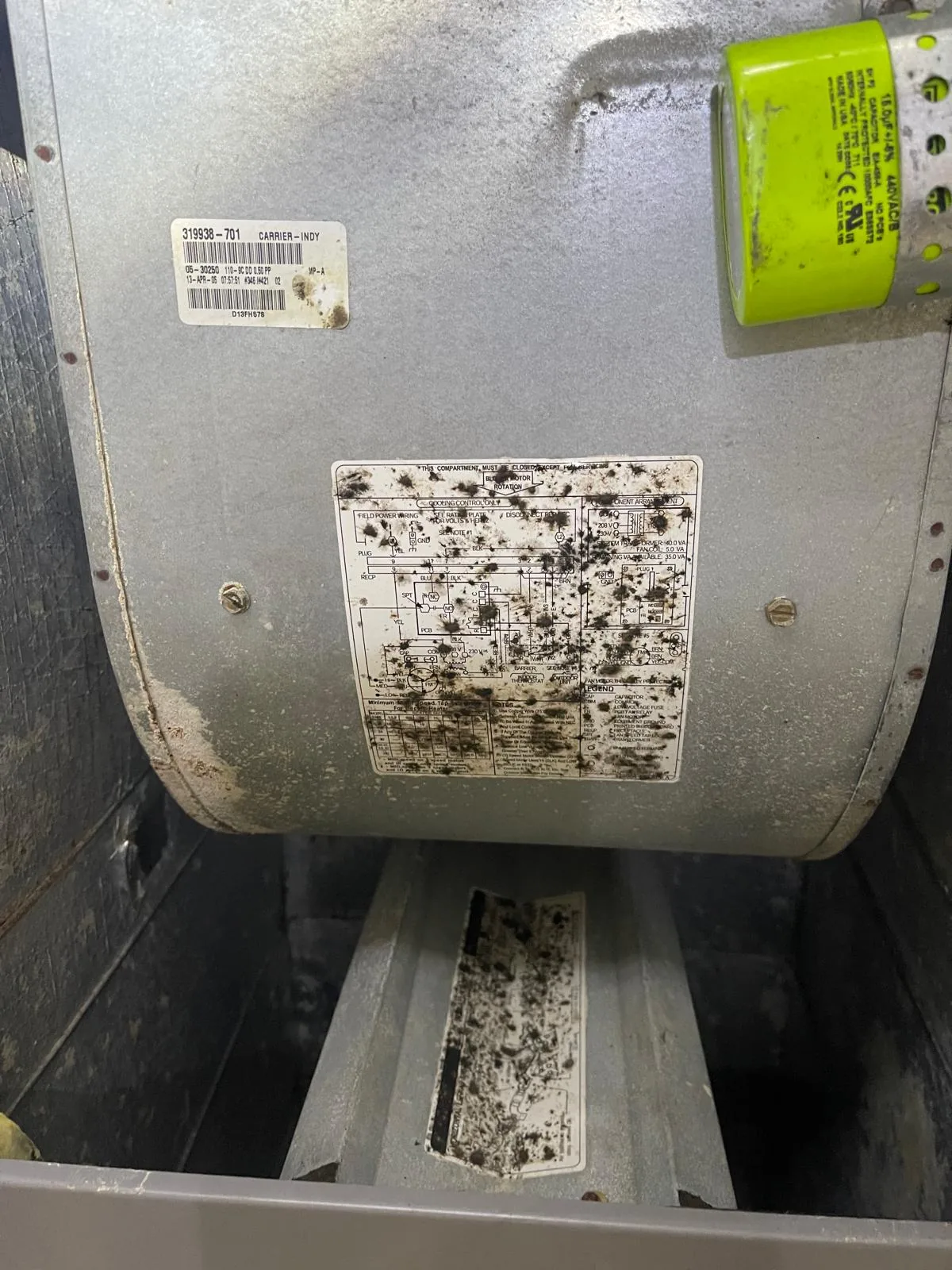
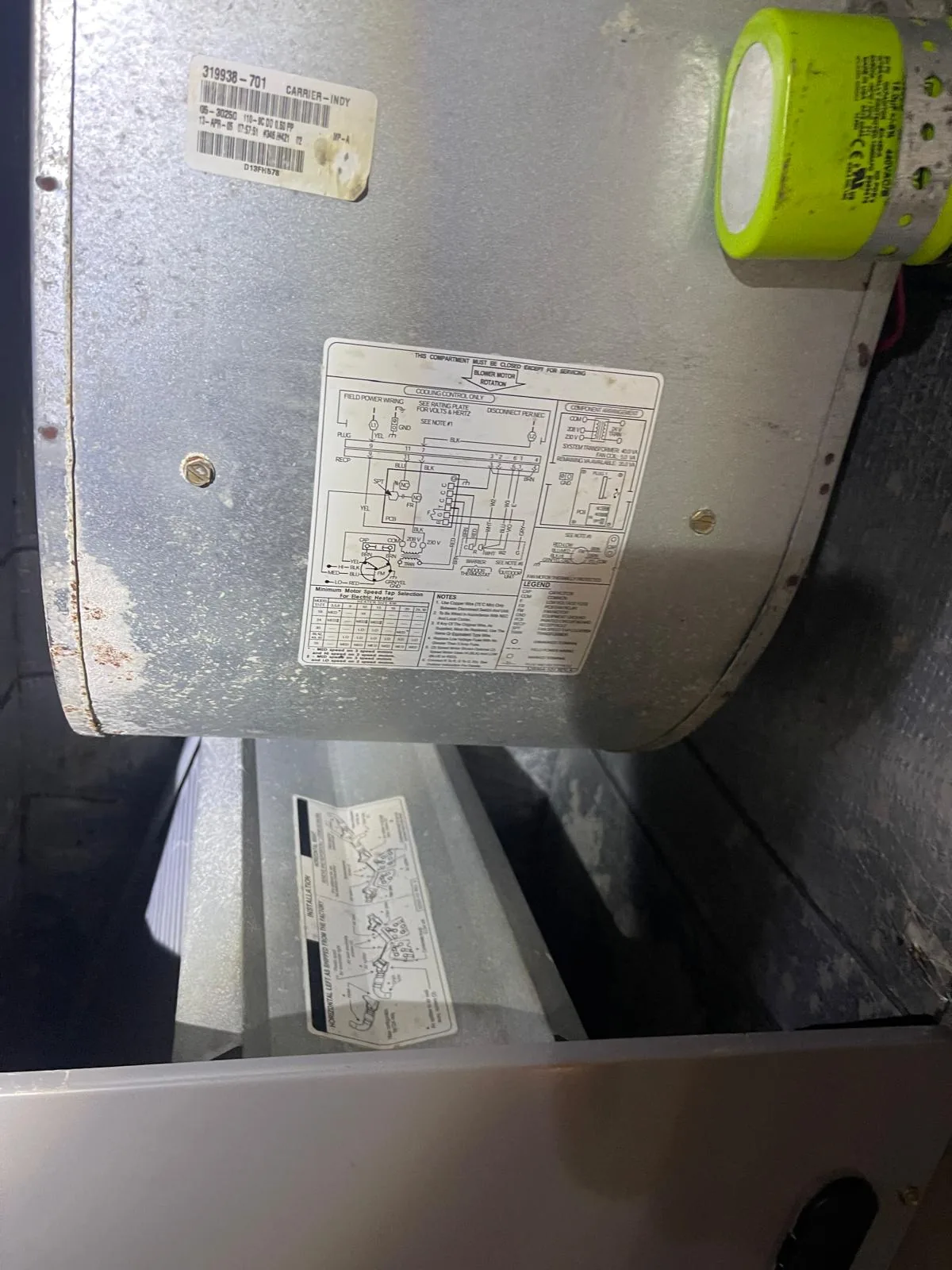
Clean the furnace and AC parts
The blower, the plenums, the coil face and the drain pan get cleaned too. A dirty part left behind can recontaminate the clean ducts. EPA
In the drawing: The blower turns and the coil and plenum come clean, while the vacuum keeps pulling. The close-up shows the coil fins coming clean.
Step 6 of 6
Seal up and show you
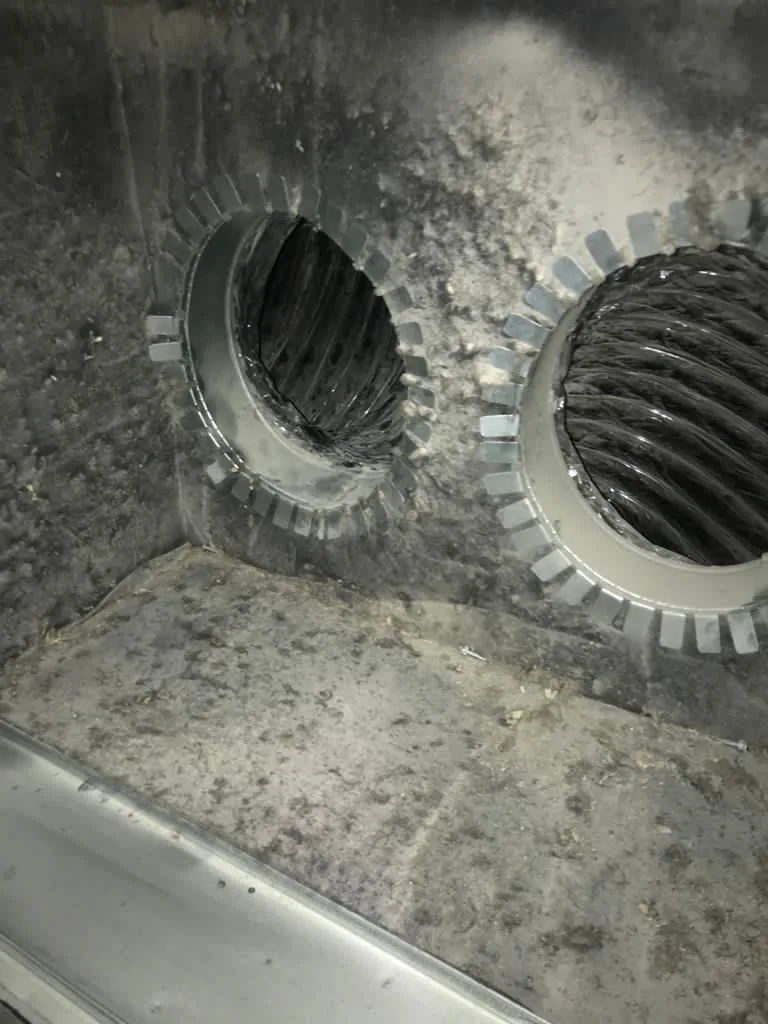
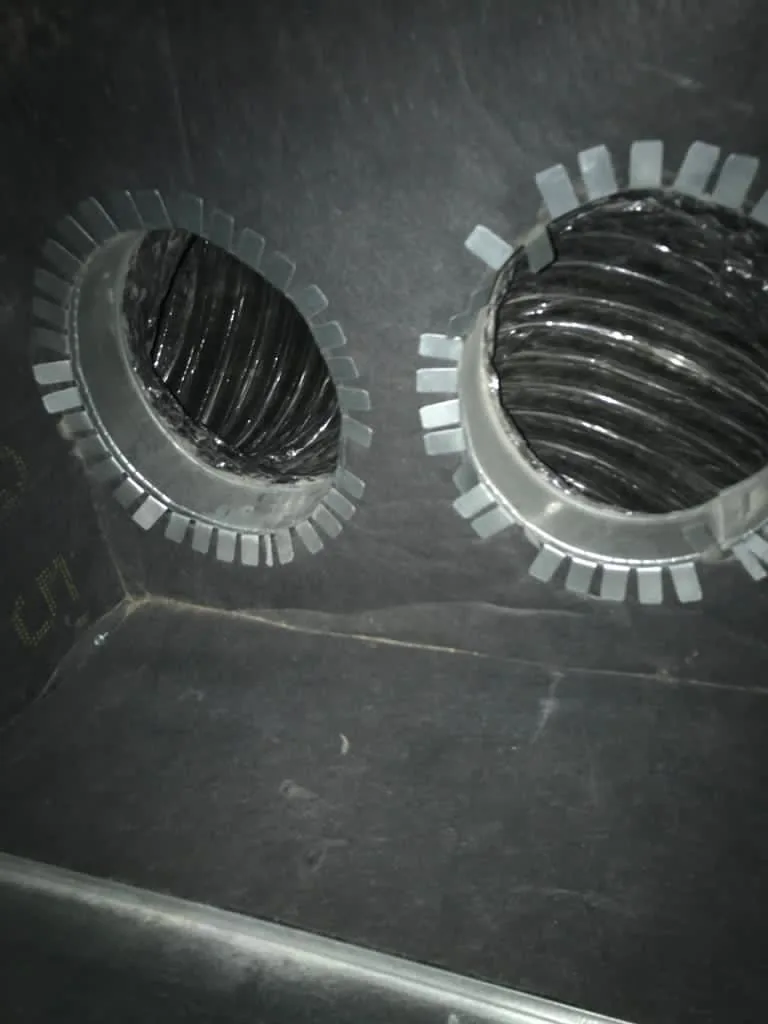
Access holes get a metal patch and foil tape. You get the after photos from the same spots as the before photos, and a filter check. EPA
In the drawing: The access hole gets its patch, the covers come off, and the camera goes back to the same spots for the after photos. The close-up shows the same duct, clean.
What comes into your house
- Inspection camera
- Goes into branch lines and trunks to show what's there, before and after.
Watch step 1: inspect - HEPA-filtered vacuum
- Holds the whole system under negative pressure, so loose debris travels to it and not into the room.
Watch step 3: negative pressure - Rotary brushes and air whips
- Sized to the duct, they scrub the walls and push debris down the line toward the vacuum. Flex duct and duct board get soft bristles only.
Watch step 4: brush - Vent covers and drop cloths
- Seal the vents we aren't working on, and protect the floor at the ones we are.
Watch step 2: protect - Metal patches and foil tape
- Close every access hole we cut, so the system is sealed when we leave.
Watch step 6: seal and show
What we won't do
Sell chemicals as a routine add-on
EPA has registered no chemical biocides for use inside internally insulated air ducts. We use a treatment only when a problem calls for it, and we explain it first. EPA
Spray sealant over a problem
Sealants never go on wet duct liner, active mold or debris. They come after cleaning, if at all. EPA
Promise health benefits
Duct cleaning has never been shown to prevent health problems, so we don't claim it does. We clean what the inspection shows needs cleaning. EPA
How to check a duct cleaner's method
You can look up any company in NADCA's directory and filter for staff with ASCS certification. NADCA directory
Whoever you hire, ask them three things:
- Will you show me photos from inside my ducts, before and after?
- How will you put the system under negative pressure, and where does the vacuum exhaust?
- Does the price include the blower, coil and drain pan, or only the vents?
Get a fixed price before any cleaning starts
You get one written price for the whole job, with the inspection photos behind it.
Call (469) 514-7300